
Is Ramen Unhealthy or Healthy? The Honest Answer
Is ramen unhealthy or healthy? The short answer: it depends on the bowl. Restaurant ramen can be a balanced meal — instant ramen is a different story. Here is what actually matters.

Maya Chen
Contributor profile →
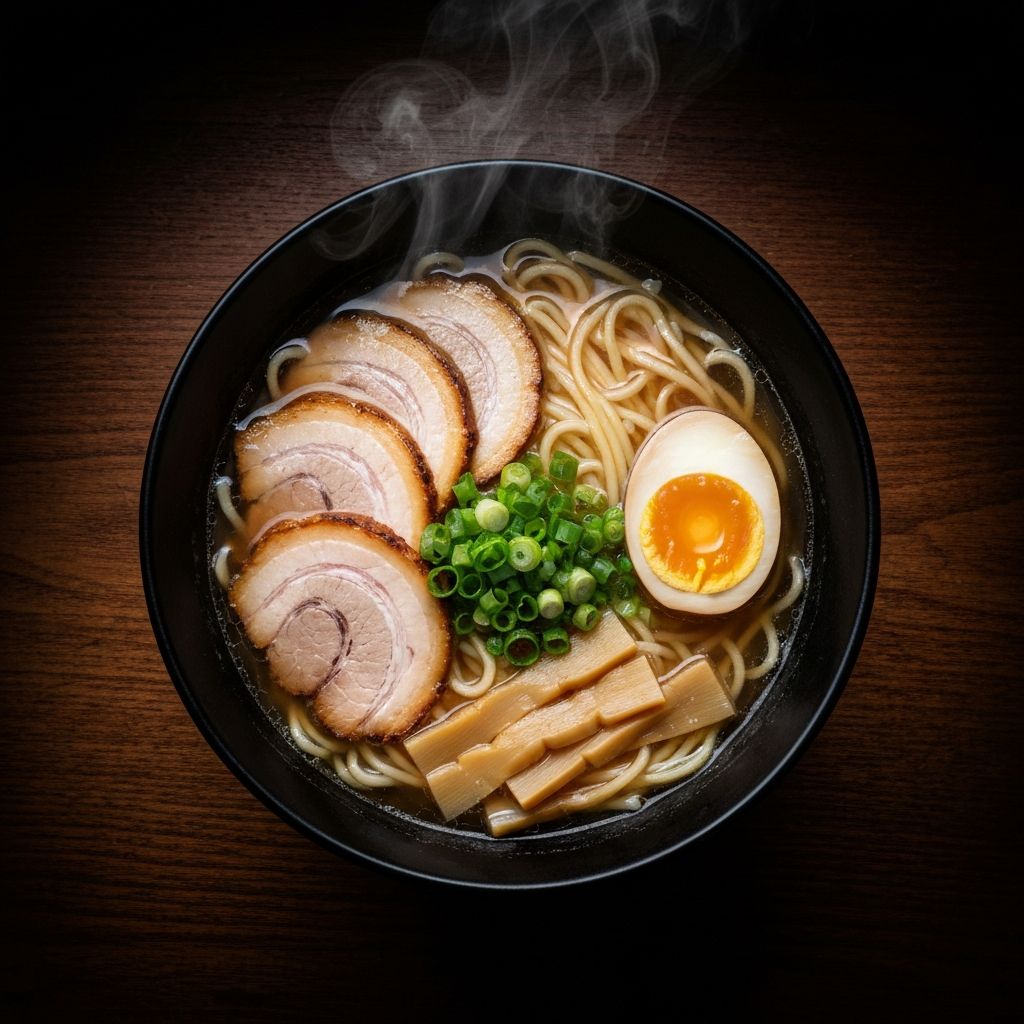
Ramen can be either healthy or unhealthy — it depends entirely on the bowl.
A fresh restaurant-made ramen with housemade broth, fresh noodles, eggs, vegetables, and lean protein is a balanced one-bowl meal that delivers protein, carbs, fats, and micronutrients in roughly the same ratios nutritionists recommend.
A 19-cent instant ramen brick eaten alone, on the other hand, is a sodium bomb that's mostly refined carbs and saturated fat with almost no protein, fiber, or vegetables.
The word "ramen" covers both, which is why the answer is "it depends" — and why understanding the difference is the only thing that matters.
We love ramen, and we cook and eat it weekly. Here is the framework we use to tell a healthy bowl from a problem one.
What makes a ramen bowl healthy
A well-built ramen bowl is closer to a Japanese-style stew than to fast food.
A typical restaurant tonkotsu or shoyu bowl runs roughly 500–700 calories with 25–35 grams of protein, generous fiber from scallions, bamboo shoots, mushrooms, corn, and bok choy, and meaningful amounts of B vitamins, iron, and selenium from the egg and pork or chicken.
The broth — even the rich-looking ones — is mostly water, gelatin from long-simmered bones, and umami compounds, none of which are nutritionally harmful.
The healthiest ramen bowls we make at home swap out half the noodles for extra vegetables, add a soft-boiled egg, use a lean protein like chicken thigh or tofu, and lean on miso or chicken-based broths instead of the richest pork tonkotsu.
What makes a ramen bowl unhealthy
The two real culprits are sodium and the instant-noodle format. A single packet of instant ramen with the full seasoning packet typically contains 1,500–2,000 milligrams of sodium — most of the FDA's daily recommended limit in one meal.
Add the fact that the noodles are deep-fried (which is how the brick shape is preserved) and you get a meal that's high in saturated fat, refined carbs, and salt while being low in protein and fiber.
Even restaurant ramen can land in the 1,800–2,500 mg sodium range. If you have high blood pressure or a heart condition, that's worth knowing — and we cover bowl-by-bowl strategies for managing it in our diabetic-friendly ramen guide.
How to make any ramen bowl healthier
We follow five habits and they apply to restaurant ramen and instant noodles alike: drink only half the broth, double the vegetables (spinach, bok choy, mushrooms, scallions), add a soft-boiled egg for protein, choose a leaner broth (miso, shoyu, chicken paitan) over the heaviest tonkotsu, and use only half the seasoning packet if you're cooking instant.
With those changes, even a $0.19 ramen brick becomes a reasonable weeknight meal.
The bottom line: ramen is as healthy as you build it. The dish itself is neutral. What you put in the bowl and how often you eat it determine whether it earns a place in a balanced diet.
How restaurant ramen compares to other fast-casual meals
People are often surprised when we put ramen next to a fast-food burger and fries or a "healthy" grain bowl. A well-made restaurant tonkotsu ramen typically runs 550–700 calories, 28–35 grams of protein, and 1,800–2,200 mg of sodium.
A fast-food double cheeseburger combo is about 1,000 calories, 35 grams of protein, and 1,400 mg of sodium with almost no micronutrients. A grain bowl from a casual chain might look healthier — around 600 calories — but often lands in the same sodium range as ramen while delivering less protein.
The honest comparison: ramen is not worse than these, and it's often better, especially when you eat it the way Japanese ramen-ya intend it to be eaten.
The key difference is frequency and modification. Eating a full bowl of ramen with all the broth three times a week puts you in sodium excess territory.
Eating a bowl twice a week, drinking half the broth, and loading up on the vegetables and egg puts you well within reasonable nutritional limits for most healthy adults.
Instant ramen vs restaurant ramen: two completely different foods
We can't say this enough: instant ramen and restaurant ramen are nutritionally different animals. Instant ramen noodles are deep-fried to preserve shelf life, which adds 200–300 calories of saturated fat per serving before you add anything else.
The seasoning packets are 60–80% sodium with virtually no nutritional benefit. The noodles themselves offer almost no fiber, minimal protein, and no meaningful vitamins or minerals.
Restaurant ramen uses fresh or dried (but not fried) noodles, a broth made from real bones and aromatics, and toppings that add genuine nutrition — soft-boiled eggs for protein and B vitamins, chashu pork for protein and iron, mushrooms for B vitamins and umami, scallions for vitamin K, corn for fiber.
It's a completely different meal even though it shares a name with the $0.29 brick version. The healthiness question only gets complicated when people conflate the two.
Our weekly ramen habits
We eat ramen two or three times a week and do not consider it a guilty pleasure. Our home bowls almost always use miso or shoyu broth, half a portion of noodles supplemented with extra bok choy and mushrooms, two soft-boiled eggs, and either tofu or thinly sliced chicken.
Sodium stays under 1,000 mg per bowl because we build our own broth from dashi and white miso, which is much lower-sodium than most restaurant versions. When we eat restaurant ramen, we drink half the broth and always add an extra egg.
That framework makes ramen a reasonable, satisfying, nutrient-dense meal we feel good about eating regularly.
The bottom line has not changed: ramen is exactly as healthy as you make it. Start with a broth, add protein and vegetables, moderate the sodium, and it belongs in any well-balanced diet.
Managing a specific condition? See Is Ramen Good for Diabetics? for the exact ordering adjustments that matter for blood sugar, Is Ramen Healthier Than Pasta? for a side-by-side comparison, or our 5 best low sodium instant ramen picks if you're cooking at home and want to cut sodium at the source.