
What Is Mazemen? Brothless Ramen Explained
What is mazemen? Brothless ramen explained: mazemen vs. mazesoba vs. abura soba, how it differs from tsukemen, how to eat it, and where to find it near you.

Jackson Hewitt
Contributor profile →
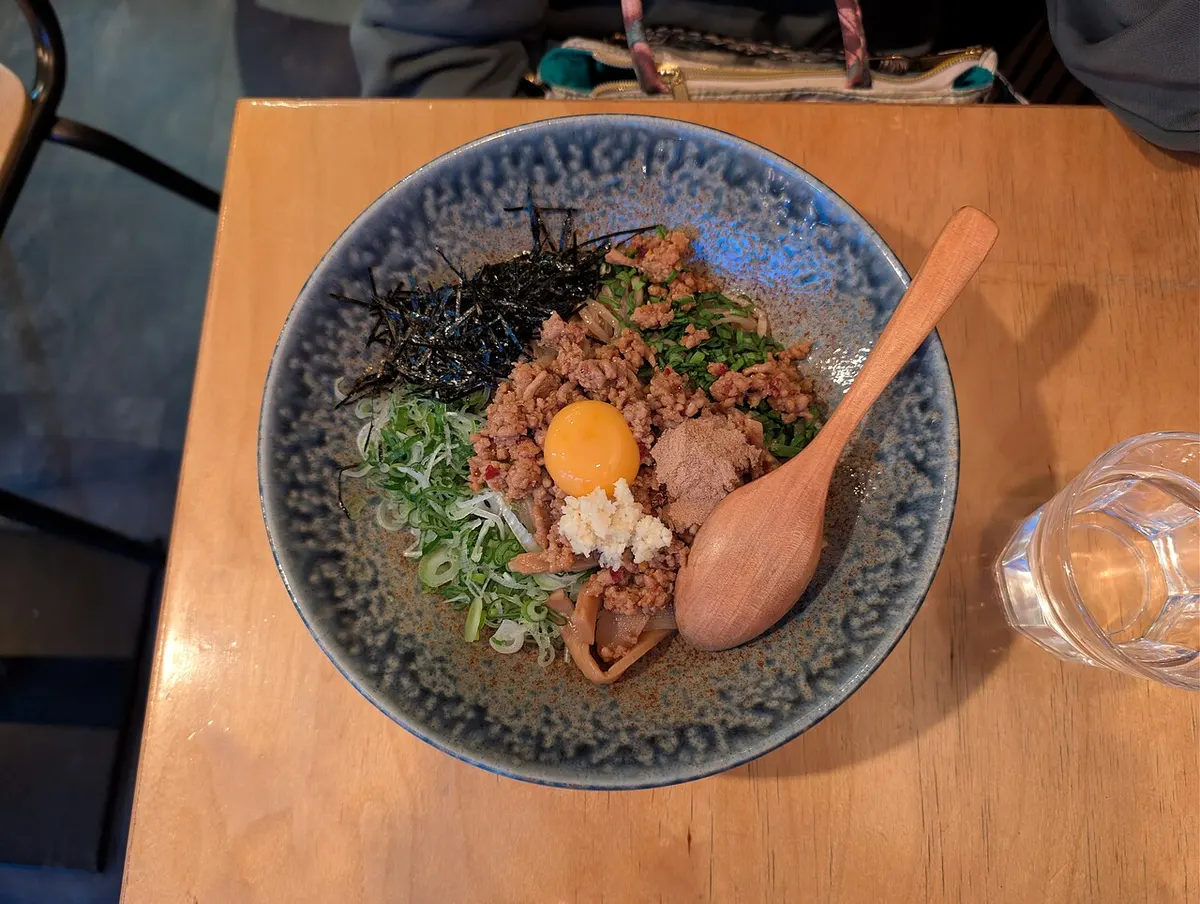
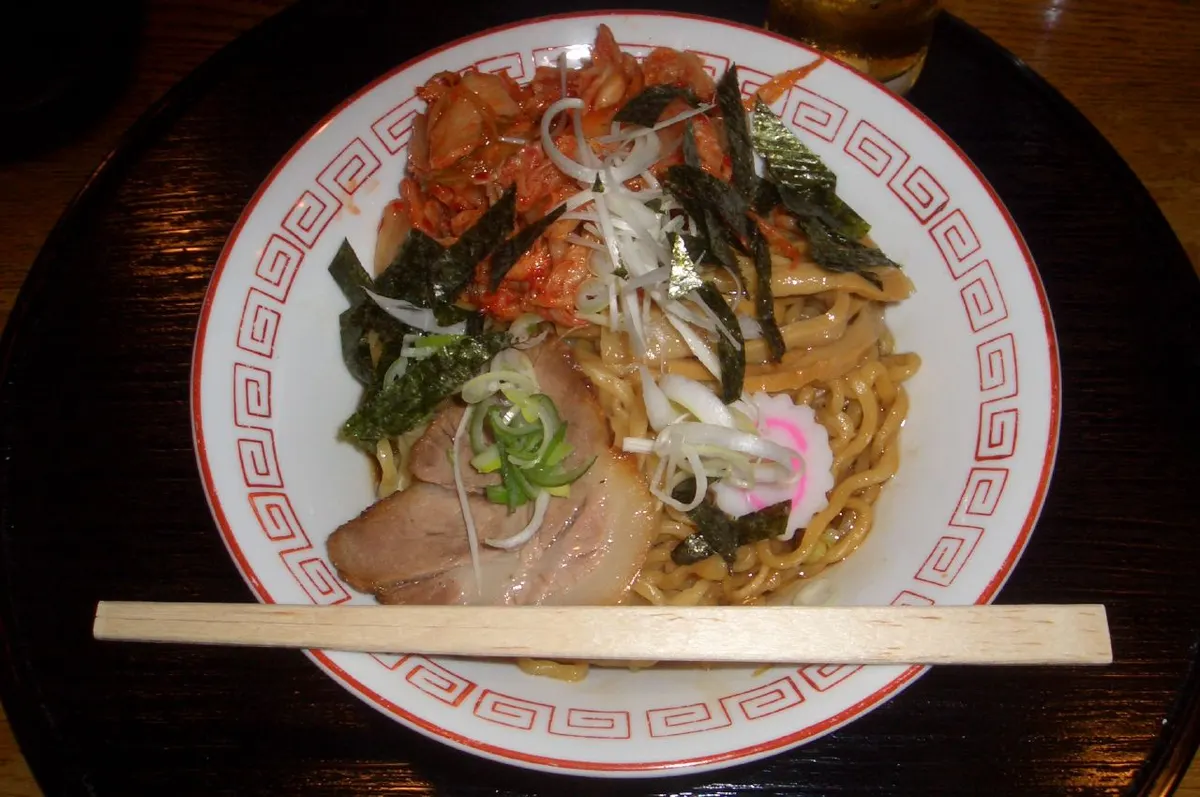
Mazemen (混ぜ麺) is brothless ramen: thick, chewy ramen noodles served with a small amount of concentrated sauce and seasoned oil at the bottom of the bowl, piled with toppings that you mix together before eating.
The name means "mixed noodles," and you'll also see it called mazesoba (まぜそば) or abura soba (油そば, "oil noodles"). Instead of sipping soup, you get every bit of flavor clinging directly to the noodles.
If you've spotted mazemen on a ramen menu and wondered where the soup went, this guide explains what's in the bowl, the main styles, how it compares with tsukemen and regular ramen, and how to eat it.
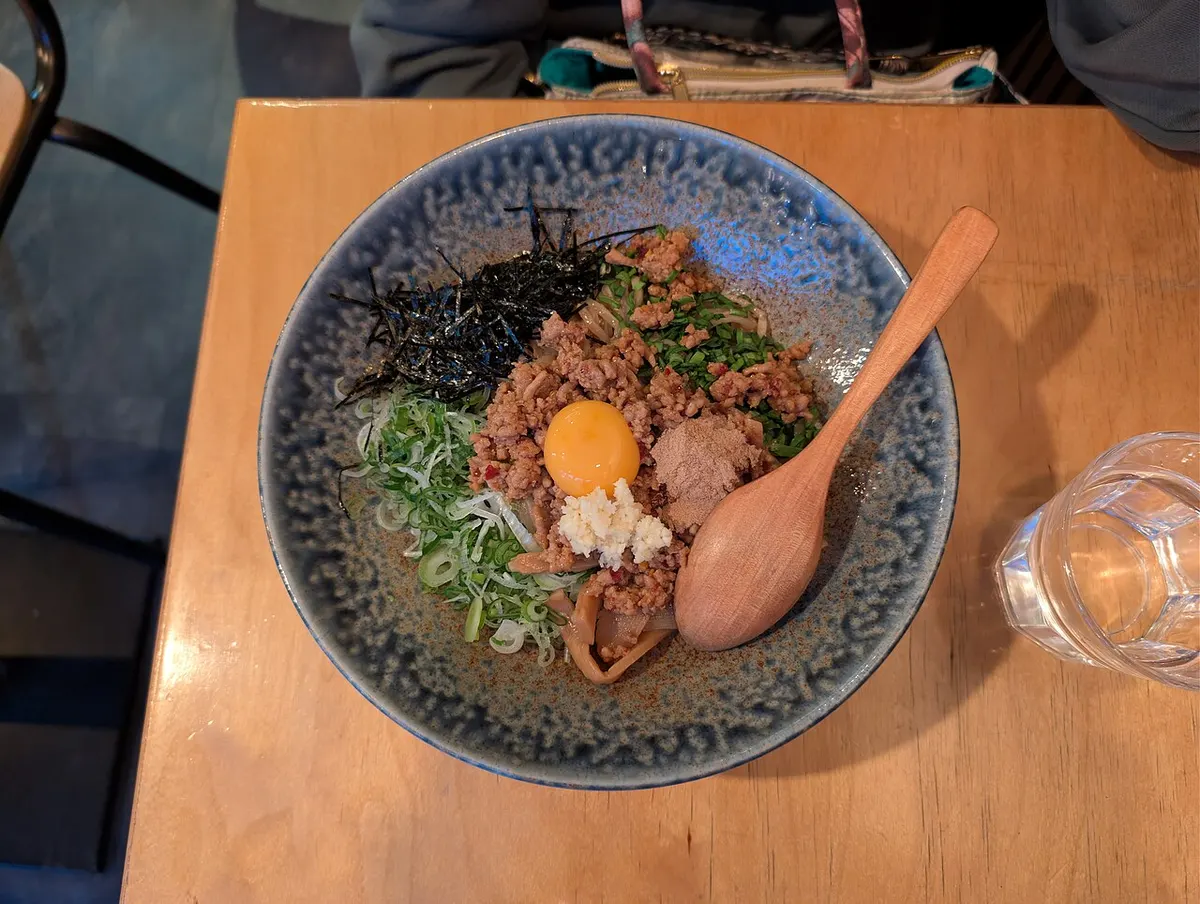
What is mazemen?
A bowl of mazemen has three main parts:
- Tare and oil: a few spoonfuls of strong seasoning sauce, usually soy-based, plus an aromatic fat such as pork lard, chicken oil, sesame oil, or chili oil. This sits at the bottom of the bowl and becomes the "sauce" once everything is mixed.
- Noodles: typically thick, wavy or flat ramen noodles with plenty of chew, because they need to hold up to heavy mixing and grab the sauce. Like all ramen noodles, they're made with wheat flour and alkaline kansui (see what ramen noodles are made of).
- Toppings: often seasoned ground pork or chashu, a raw or soft egg yolk, green onion, garlic chives, shredded nori, bamboo shoots (menma), and sometimes fish powder, garlic, or tempura bits.
Because there's no broth to dilute anything, mazemen tastes more intense than a soup bowl of the same size. It also cools faster, so it's meant to be eaten right away.
Mazemen, mazesoba, and abura soba: what's the difference?
These names overlap, and shops use them loosely, but they usually point to slightly different styles:
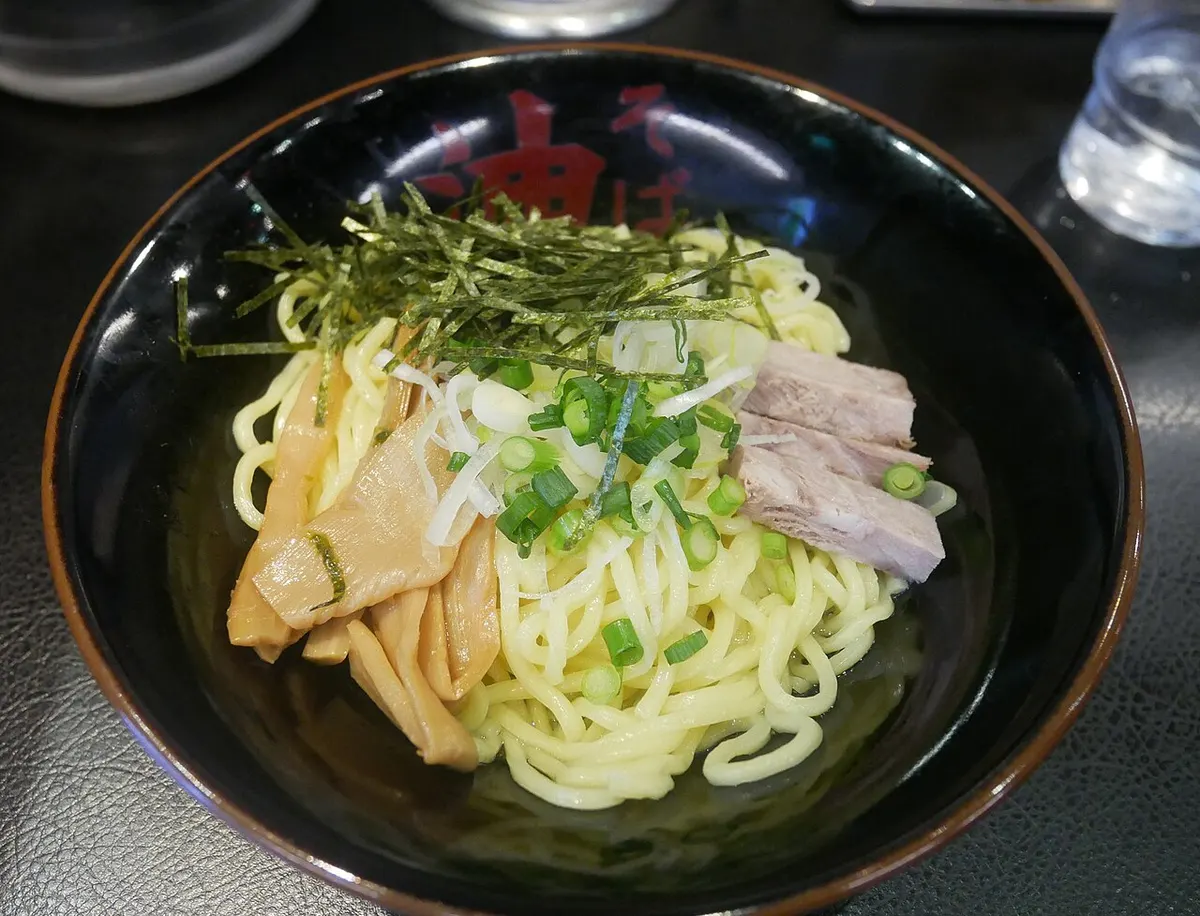
- Abura soba: the older, simpler style from Tokyo. It's usually credited to shops in the Musashino area of western Tokyo in the 1950s. Noodles are tossed with soy tare and oil and topped with classic ramen toppings like chashu, menma, and green onion. Diners typically add vinegar and chili oil (rayu) at the table.
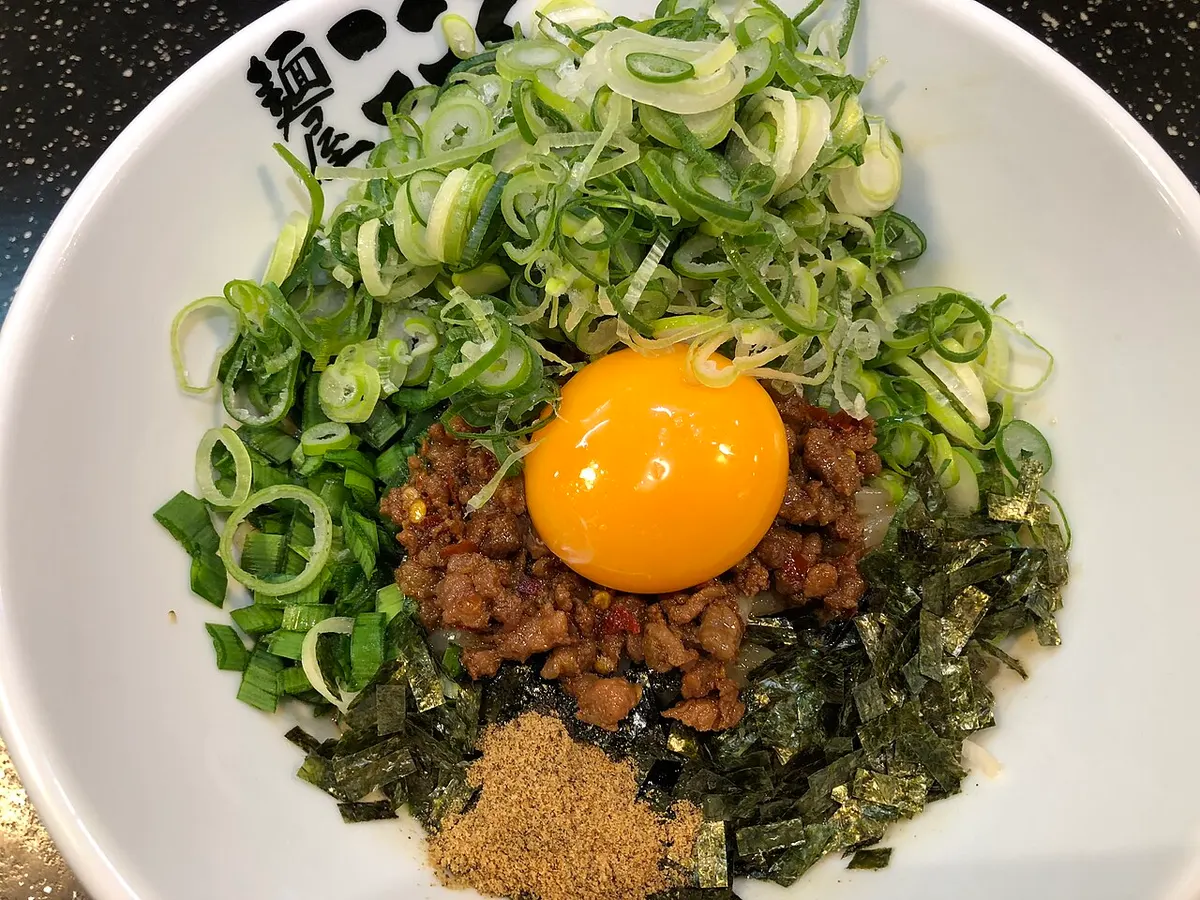
- Taiwan mazesoba: despite the name, it comes from Nagoya, Japan, not Taiwan. It's widely credited to the Nagoya shop Menya Hanabi around 2008 and borrows the spicy minced pork from Nagoya's local "Taiwan ramen." Expect chili-garlic ground pork, a raw egg yolk, chives, green onion, nori, and fish powder.
- Mazemen: the broad, catch-all term, especially in the US. It can mean either style above, or a shop's own creation, like a shoyu, miso, or even pesto-style brothless bowl.
Mazemen vs. tsukemen vs. regular ramen
| Mazemen | Tsukemen | |
|---|---|---|
| Broth | None, just a little tare and oil | A separate bowl of thick dipping broth |
| How you eat it | Mix everything together, then eat | Dip each bite of noodles into the broth |
| Noodles | Thick and chewy, served hot | Thick and chewy, usually served cool |
| Flavor | Concentrated and rich, coats every strand | Rich broth, but you control how much each bite gets |
| Ending | Some shops add rice to soak up leftover sauce | Soup wari: thin the broth and drink it |
Regular ramen is the outlier of the three: the noodles sit in a full bowl of drinkable soup. If you like the idea of separate noodles and broth, read our guide to tsukemen. If you want a spicy, sesame-based bowl that can also come soupless, see what is tantanmen.
How to eat mazemen
- Mix right away. Use your chopsticks to lift the noodles from the bottom and fold them over the toppings, again and again, until the sauce, oil, and egg yolk coat every strand. Most guides recommend mixing thoroughly, often 10 to 20 times, before the first bite.
- Taste, then adjust. Many shops set out vinegar and chili oil. A splash of vinegar cuts the richness, especially with abura soba. Add chili oil if you want more heat.
- Eat it while it's hot. Without broth to hold the heat, the noodles cool and stick together quickly.
- Finish with rice if it's offered. Some mazesoba shops, especially Nagoya-style ones, offer a small scoop of rice called oi-meshi to mix into the leftover sauce and minced pork at the bottom of the bowl.
For general ramen manners, including slurping, see how to eat ramen the right way.
Is mazemen healthier than regular ramen?
Not necessarily. Skipping the broth can mean less sodium than drinking a full bowl of soup, but the tare is concentrated and the oil is a key ingredient, so mazemen is still rich and salty. Portions of noodles are often generous, too.
If you're watching salt or fat, ask for lighter oil or less sauce, load up on vegetable toppings, and see our guides on whether ramen is healthy and the best ramen for high blood pressure.
Allergy and diet notes
- Raw egg: many mazesoba bowls come with a raw egg yolk. Ask to leave it off or swap in a cooked egg if you avoid raw egg.
- Wheat and soy: the noodles and tare almost always contain wheat and soy, so standard mazemen isn't gluten-free. See gluten-free ramen for shops with alternatives.
- Fish: fish powder and bonito flakes are common toppings, so mention it if you have a fish allergy.
- Meat-free options: some shops offer vegetable or tofu versions. Browse vegan ramen and vegetarian ramen near you.
Make Taiwan mazesoba at home
Mazemen is one of the easiest ramen styles to make at home because there's no long-simmered broth. This recipe video walks through the soy-mirin sauce, an infused oil, the spicy minced pork, and assembling the bowl.
Video: Taiwanese-style Mazesoba noodles by papadesuyo777 on YouTube.
How to find mazemen near you
On menus, look for "mazemen," "mazesoba," "maze soba," "abura soba," "brothless ramen," or "soupless ramen." Our mazemen near me page lists ramen shops in our directory whose listings mention brothless bowls.
For example, the WADAYA - West LA listing in Los Angeles mentions mazemen in its description; see our Los Angeles ramen page for more shops in that city.
Menus change often, so check a restaurant's listing or call ahead to make sure a brothless bowl is on the menu. You can also browse every shop around you with our best ramen near me search.
The bottom line
Mazemen is ramen without the soup: thick noodles, a concentrated sauce and oil, and a pile of toppings you mix together before eating. Abura soba is the simpler Tokyo original, and Taiwan mazesoba is Nagoya's spicy minced-pork version. Served hot and eaten fast, it's a filling November bowl.
For more warming ideas this season, see our guide to the best ramen for cold weather.