
Ramen vs. Soba: What's the Difference?
Ramen vs. soba: buckwheat vs. wheat noodles, light dashi vs. rich broth, hot vs. cold. How the two Japanese noodles differ and which one to order.

Jackson Hewitt
Contributor profile →
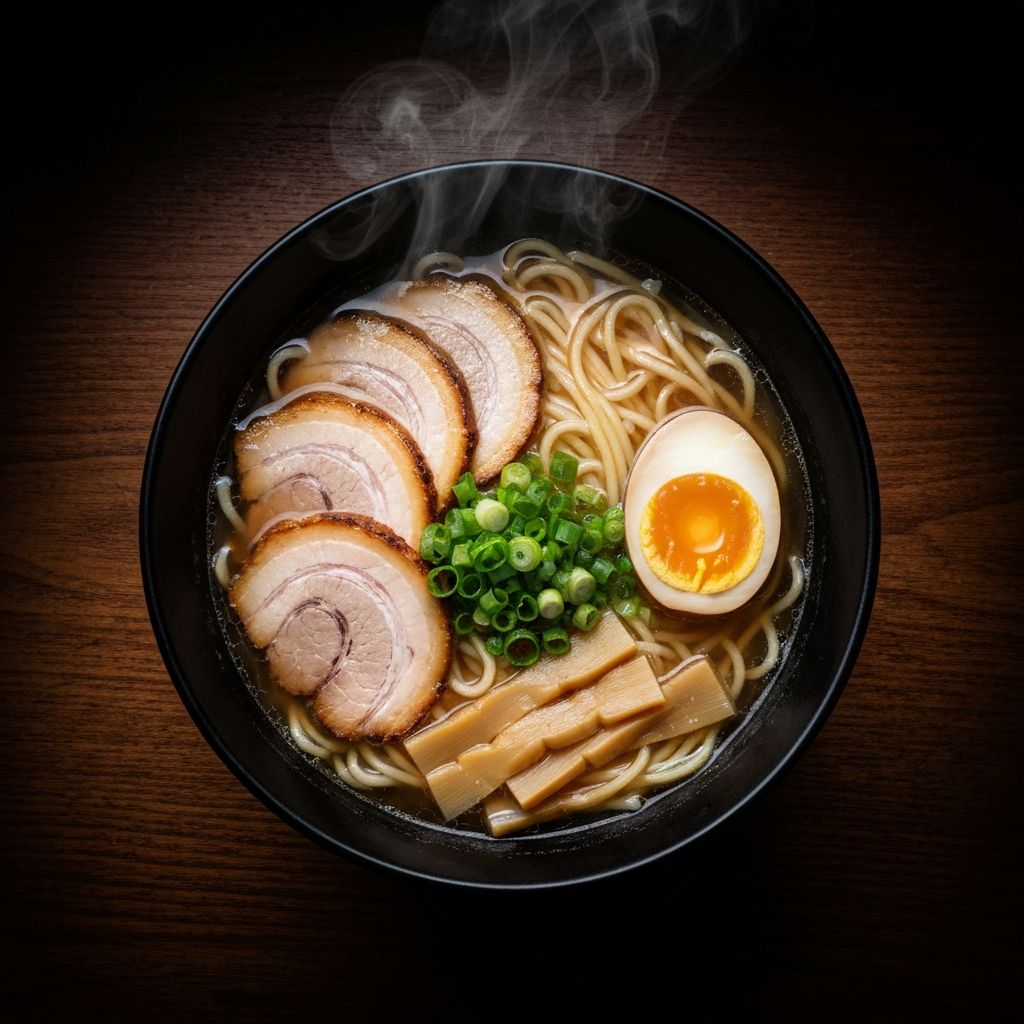
The main difference between ramen and soba is the flour: soba noodles are made mostly from buckwheat, giving them a grayish-brown color and a nutty, earthy flavor, while ramen noodles are made from wheat flour and kansui, an alkaline mineral water that makes them yellow, springy, and chewy.
The dishes differ in almost every other way too. Soba is a native Japanese noodle with centuries of history, usually served cold with a dipping sauce or hot in a light dashi broth.
Ramen is a 20th-century adaptation of Chinese wheat noodles, served almost always hot in a rich, layered broth with substantial toppings.
Both are Japanese noodle dishes, both show up on menus across the US, and confusingly, ramen has historically been called "soba" in Japan. Here is how to tell them apart and which one to order.
Ramen vs. soba at a glance
| Ramen | Soba | |
|---|---|---|
| Main flour | Wheat | Buckwheat (often blended with some wheat) |
| Key ingredient | Kansui (alkaline water) | Buckwheat flour |
| Color and texture | Yellowish, springy, elastic | Gray-brown, firm but tender, slightly grainy |
| Flavor | Mild wheat with a subtle alkaline aroma | Nutty, earthy |
| Broth | Rich stock plus tare: tonkotsu, shoyu, shio, miso | Light dashi with soy sauce and mirin, or cold tsuyu dipping sauce |
| Served | Almost always hot | Hot or cold, year-round |
| Origin | Chinese-style noodles adapted in Japan, late 1800s to 1900s | Native Japanese; widely popular since the Edo period |
The noodles: buckwheat vs. wheat and kansui
Ramen noodles are made from wheat flour, water, salt, and kansui, an alkaline mineral water (typically a mix of sodium carbonate and potassium carbonate). Kansui changes how the gluten behaves, giving ramen its firm, bouncy bite, its yellow tint, and an aroma you won't find in other noodles.
Ramen noodles come in many shapes, from the thin, straight noodles used in Hakata tonkotsu to the thick, wavy noodles used in miso ramen and tsukemen.
Soba noodles are made with buckwheat flour. Despite its name, buckwheat isn't related to wheat; it's the seed of a flowering plant. Because buckwheat has no gluten, it's hard to form into long noodles on its own, so most soba is blended with wheat flour.
The most common ratio is ni-hachi soba ("two-eight"), about 20% wheat and 80% buckwheat. Juwari soba is 100% buckwheat, which is more fragile and has a stronger buckwheat flavor.
Soba noodles are thin, cut rather than pulled, and have a slightly grainy, tender texture that's very different from ramen's springiness.
The broth and how it's served
Ramen is defined as much by its broth as its noodles. Most bowls combine a long-simmered stock (pork, chicken, seafood, or vegetables) with a concentrated seasoning called tare and an aromatic oil.
The four major styles are tonkotsu, shoyu, shio, and miso, and they range from clear and light to creamy and heavy. You can compare them on our ramen broth guide.
Soba is simpler and is just as often served cold as hot:
- Zaru soba or mori soba: chilled noodles on a bamboo tray, dipped into a cold tsuyu sauce made from dashi, soy sauce, and mirin, usually with scallions and wasabi on the side.
- Kake soba: hot noodles in a light, clear dashi-based broth.
- Topped soba: hot or cold soba with tempura (tempura soba), sweet fried tofu (kitsune soba), duck (kamo soba), or grated daikon (oroshi soba).
The cold, dip-it-yourself format of zaru soba is similar to tsukemen, ramen's dipping-noodle style. The difference is that tsukemen uses thick wheat noodles and a very concentrated, rich dipping broth, while zaru soba's tsuyu is light and clean.
Toppings
Ramen toppings are hearty: chashu pork, ajitama (marinated soft-boiled egg), menma (bamboo shoots), nori, scallions, and, depending on the style, corn, butter, bean sprouts, or chili oil. If you've wondered about the egg, see why people put eggs in ramen.
Soba toppings are usually lighter and fewer, so the buckwheat flavor stays front and center.
Where each comes from
Soba has a long history in Japan, and soba shops became a fixture of city life in Edo (now Tokyo) during the Edo period (1603 to 1868).
It's still tied to tradition today: many people in Japan eat toshikoshi soba on New Year's Eve, with the long noodles symbolizing a long life and a clean break from the year that's ending.
Ramen is much newer. It grew out of Chinese wheat-noodle dishes served in Japanese port cities in the late 19th and early 20th centuries and became a national obsession after World War II.
That history explains a common point of confusion: because "soba" was used loosely to mean noodles, ramen was originally called shina soba and later chuka soba, both meaning Chinese-style noodles. Some menus still use those names, even though there's no buckwheat in the bowl.
The same goes for yakisoba (stir-fried wheat noodles) and Okinawa soba, which are also made from wheat.
Which is healthier?
For most people, a typical bowl of soba is lighter than a typical bowl of ramen. Buckwheat adds fiber and plant compounds such as rutin, and soba's dashi broth and dipping sauce contain little fat. Ramen broth, especially rich styles like tonkotsu and miso, tends to be higher in fat and sodium.
That said, both dishes can be high in sodium, and tempura-topped soba isn't exactly light. For more detail, see our guides to the healthiest noodles you can eat and whether ramen is healthy. If you want ramen on the lighter side, look for light ramen or shio ramen near you.
Is soba gluten-free?
Only sometimes. 100% buckwheat (juwari) soba is naturally free of wheat, but most soba is ni-hachi soba, which contains wheat, and tsuyu and soba broth are usually made with wheat-containing soy sauce. Buckwheat is also a common and potentially serious allergen.
If you have celiac disease, a wheat allergy, or a buckwheat allergy, check directly with the restaurant. For ramen, our gluten-free ramen page lists shops that offer gluten-free options; confirm with the shop before ordering.
Ramen or soba: which should you order?
- Order ramen if you want a hot, filling, rich bowl with a complex broth and plenty of toppings, which is a strong choice as the weather turns colder. Our guide to the best ramen for cold weather covers the heartiest styles.
- Order soba if you want something lighter, want to taste the noodle itself, or want a cold noodle dish.
- Can't decide? Many Japanese restaurants in the US serve both, along with udon. Our ramen vs. udon comparison explains Japan's third major noodle.
The bottom line
Ramen and soba are both Japanese noodles, but they're built from different grains and around different ideas. Soba is a buckwheat noodle that's often served cold and lets the noodle's flavor lead. Ramen is a springy, kansui-treated wheat noodle that's served in a rich, layered broth.
When you're craving ramen, our ramen finder and best ramen near me pages cover thousands of ramen restaurants across the US and Canada, and you can browse Japanese ramen near you to find a traditional shop.
Frequently Asked Questions
Is soba healthier than ramen?
In most cases, yes. Soba is made mostly from buckwheat, which adds fiber and plant compounds like rutin, and it is commonly served cold with a dipping sauce or in a light dashi broth. Most ramen is served in a richer, saltier, often fattier broth.
A simple bowl of soba is usually lower in fat and calories than a typical bowl of ramen, though sodium in the dipping sauce or broth can still be significant.
Is soba gluten-free?
Not always. Only juwari soba, made from 100% buckwheat flour, is naturally wheat-free. Most soba is ni-hachi soba, which contains about 20% wheat flour, and the tsuyu dipping sauce and hot broth are usually made with soy sauce, which contains wheat.
If you need to avoid gluten, ask the restaurant specifically about both the noodles and the sauce.
Can you use soba noodles in ramen?
You can, but the result will not taste like ramen. Ramen noodles get their springy bite, yellow color, and distinctive aroma from kansui, an alkaline mineral water.
Soba noodles are softer, more brittle, and have a nutty, earthy buckwheat flavor that works best with light dashi-based broths rather than heavy tonkotsu or miso broths.
Why is ramen sometimes called chuka soba?
In Japan, "soba" has long been used loosely to mean noodles. When ramen arrived from China in the late 19th and early 20th centuries, it was called shina soba and later chuka soba, both meaning Chinese-style noodles. The name stuck on some menus even though ramen noodles contain no buckwheat.
The same is true of yakisoba and Okinawa soba, which are made from wheat.
What is soba-yu?
Soba-yu is the hot, starchy water the soba noodles were cooked in. At many soba restaurants it is served at the end of a cold soba meal so you can pour it into the leftover dipping sauce and drink it as a light soup.
It is similar in spirit to soup wari, the hot broth added to leftover tsukemen dipping sauce at ramen shops.